Lofty Editorial
Luxury Real Estate for Less: Fractional Ownership Guide
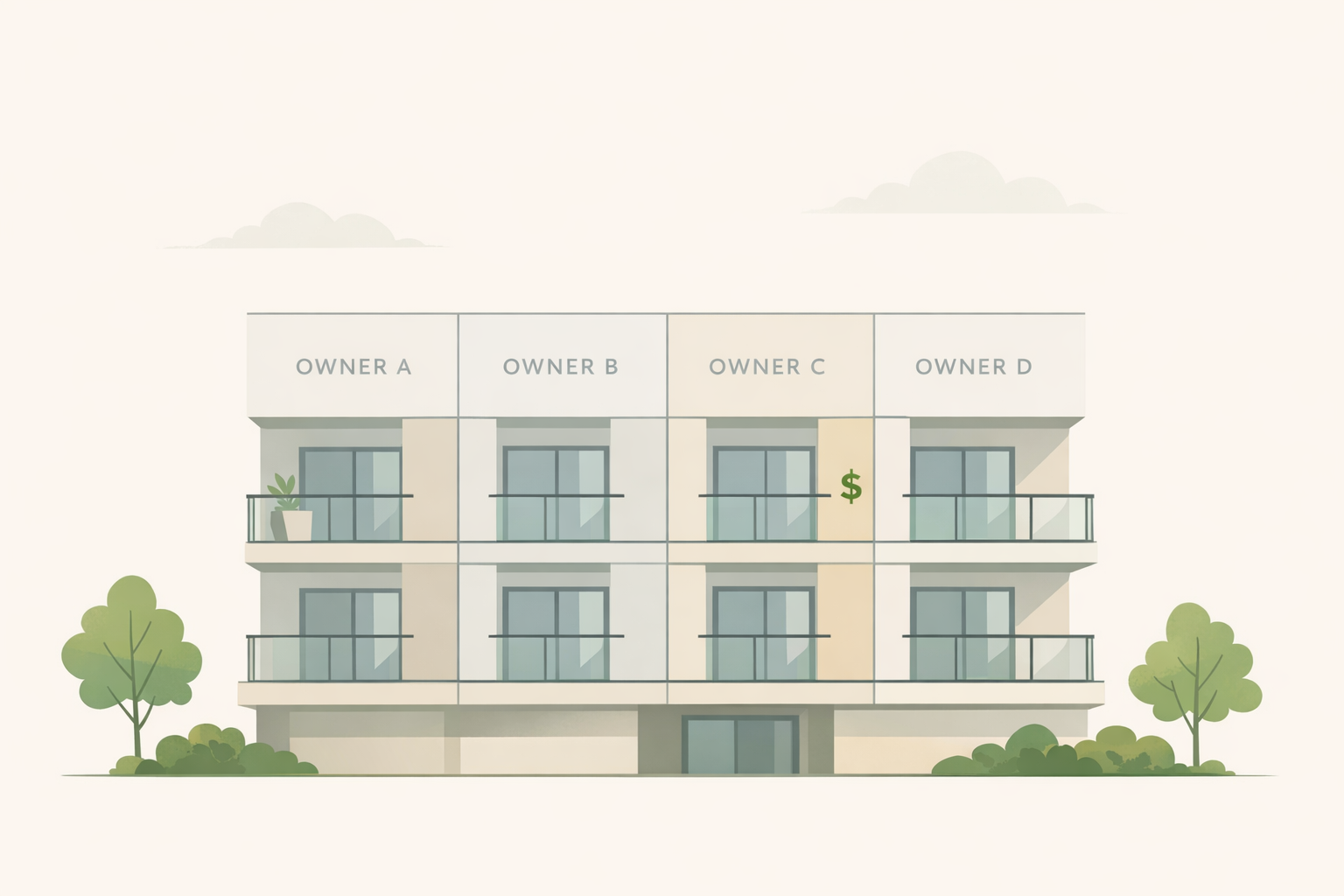
Fractional ownership makes luxury real estate more accessible by letting you buy a share of high-value properties instead of the entire property. This approach lowers costs, splits expenses among co-owners, and provides professional management for hassle-free ownership. Unlike a timeshare, fractional ownership gives you actual equity, meaning you can benefit from property value growth and sell your share when needed. Platforms like Lofty allow you to start investing with as little as $50, offering opportunities to diversify across multiple properties and markets.
Key Points:
- Lower Costs: Buy a share instead of the whole property, reducing upfront investment and ongoing expenses.
- True Ownership: Gain equity, not just usage rights, allowing for appreciation and resale.
- Professional Management: Day-to-day operations are handled for you.
- Diversification: Invest in multiple properties across different locations with minimal capital.
- Easy Start: Platforms like Lofty simplify the process with investments starting at $50.
Fractional ownership offers a simpler, more affordable way to step into luxury real estate without the usual financial and management burdens.
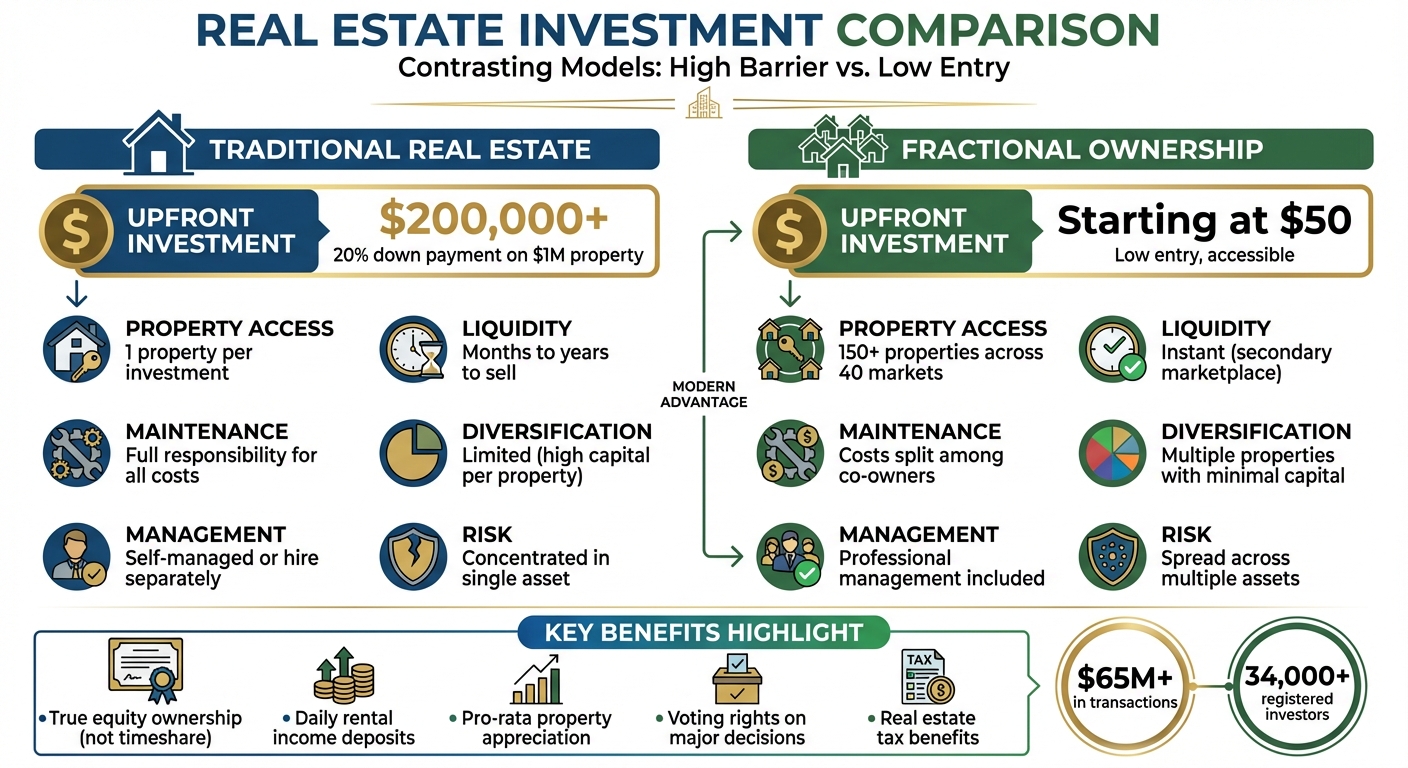
Fractional Ownership vs Traditional Real Estate Investment Comparison
Fractional Ownership and Luxury Real Estate with Spencer Rascoff
Benefits of Fractional Ownership
Fractional ownership offers a practical solution to the financial and operational hurdles often associated with luxury real estate. Rather than committing hundreds of thousands - or even millions - of dollars to a single property, this model allows you to invest smaller amounts, diversify your holdings, and share both costs and responsibilities with other co-owners.
Lower Entry Costs for Premium Properties
Buying luxury real estate the traditional way typically requires a hefty upfront investment, including down payments of about 20% of the purchase price, plus closing costs. For a $1 million property, that means at least $200,000 upfront - before factoring in ongoing expenses.
Fractional ownership changes the game. Instead of purchasing an entire property, you buy a share, significantly lowering the financial barrier. For example, platforms like Lofty make it possible to invest in luxury real estate with as little as $50. This opens the door to high-end rental properties that would otherwise require six-figure commitments.
And it’s not just about lower upfront costs - this model also lightens the load when it comes to ongoing expenses.
Shared Maintenance and Operating Costs
With fractional ownership, the recurring expenses of a property - such as taxes, insurance, maintenance, and utilities - are split among the co-owners based on their shares. These costs, which can easily reach tens of thousands of dollars annually for luxury properties, become much more manageable when divided among a group.
Even better, professional management companies handle the day-to-day operations. While you retain voting rights for major property decisions, the heavy lifting - like upkeep and tenant management - rests with experienced property managers who ensure the property remains in excellent condition.
But the benefits don’t end with cost-sharing. Fractional ownership also makes it easier to spread your investments across multiple opportunities.
Diversify Your Real Estate Portfolio
One of the smartest advantages of fractional ownership is the ability to diversify your investments without tying up a large amount of capital in a single property. Instead of putting $200,000 into one luxury home in a single market, you can allocate that same amount across several properties in different locations and asset types.
Lofty, for instance, provides access to over 150 properties across 40 different markets. This geographic and asset-type diversification helps reduce risk. If one property underperforms, your other investments can help balance things out - a level of risk management that’s hard to achieve when you own just one property outright.
"Diversify your portfolio without multiplying your workload. Vote on key property decisions, and professional property managers handle the rest."
This model also allows you to explore different markets and property types without overcommitting, giving you room to refine your strategy while gaining valuable real estate experience.
How Fractional Ownership Works
Understanding how fractional ownership operates is crucial for making smart investment choices. Let’s break down the legal frameworks, usage rules, and financial benefits that define this model.
Legal Structures and Ownership Agreements
Fractional real estate investments typically rely on three main legal structures. The most common is the Limited Liability Company (LLC). When you invest through an LLC, you purchase membership units in the company that owns the property. This setup limits your personal liability and makes transferring your share relatively simple. Another option is Tenancy-in-Common (TIC), where your name appears directly on the property deed alongside your ownership percentage. While this provides more direct control, it also complicates share transfers and increases liability risks. Lastly, Limited Partnerships (LPs) are often used for larger commercial investments. In this arrangement, a general partner manages the property, while limited partners contribute capital.
"Fractional ownership typically involves... a sponsor or manager forms a legal ownership entity and acquires the asset (a jet, building, etc.)... The entity divides ownership rights into shares by issuing equity, partnership stakes, membership units, or other fractional interests." - Investopedia
Each fractional ownership deal includes an operating agreement that outlines your rights and responsibilities. This agreement covers everything from usage schedules to maintenance duties and how disputes are resolved. It’s also essential to confirm whether your investment grants a deeded interest in the property (true ownership) or simply a right-to-use contract, which functions more like a timeshare. Many agreements include a "Right of First Refusal" clause, which requires that you offer your share to other co-owners before selling it on the open market.
Once the legal foundation is in place, the next step is to understand how usage and scheduling work.
Property Usage and Scheduling
For rental properties, such as those on platforms like Lofty, usage is often a non-issue since the focus is on generating income and property appreciation. However, for vacation properties, how time is allocated among co-owners becomes a key consideration.
Vacation properties typically use rotating priority systems to ensure fair access to high-demand dates, like holidays or summer weeks. For example, if you get first pick for a prime week one year, you might move to the bottom of the priority list the following year. A 1/12 share generally provides 4 to 5 weeks of exclusive use annually, while a 1/8 share offers 6 to 7 weeks.
Property managers usually reserve specific weeks - often one month annually - for deep cleaning and necessary maintenance. Before buying, check whether you’re allowed to rent out your unused weeks, as this can help offset your share of maintenance costs. These scheduling systems are designed to balance access while preserving the property’s overall value for all co-owners.
Property Value Growth and Selling Shares
Fractional ownership doesn’t just provide access - it also allows you to benefit from property appreciation.
As a fractional owner, you gain from pro-rata appreciation. For instance, if you own 10% of a property that increases in value by $100,000, your share grows by $10,000. This means you enjoy the same percentage of gains as a full owner would.
"As a co-owner of the property, you will benefit from any capital appreciation percentage of the asset value over time." - Fractional Group
When it’s time to sell, the "Right of First Refusal" clause usually requires you to offer your share to current co-owners first. If no one buys, you can list your share through specialized real estate agents, group resales, or secondary marketplaces like Lofty. Keep in mind that selling fractional shares can be less straightforward than selling traditional real estate, as the buyer pool is smaller, and most banks won’t provide mortgages for fractional properties. When calculating your returns, don’t forget to account for property management fees, maintenance costs, and any legal expenses incurred during your ownership.
With clear legal structures, organized scheduling, and the potential for value growth, fractional ownership makes high-end real estate more accessible while safeguarding your investment.
sbb-itb-a24235f
Getting Started with Lofty
Now that you’ve got a handle on how fractional ownership works, let’s dive into how Lofty makes investing in U.S. rental properties simple and accessible - no matter your budget or experience in real estate.
How Lofty Simplifies Fractional Ownership
Lofty operates as a direct fractional ownership marketplace. Unlike pooled investment portfolios managed by companies, Lofty allows you to pick specific rental properties and invest with real equity through a Wyoming LLC. This setup gives you true ownership, not just a right-to-use agreement.
With a starting investment of just $50 per share, Lofty opens the door to real estate investing for everyone. Compare that to traditional real estate, where a down payment can easily run $50,000 or more. Plus, with over 150 properties across 40 U.S. markets, you have plenty of options to diversify your investments.
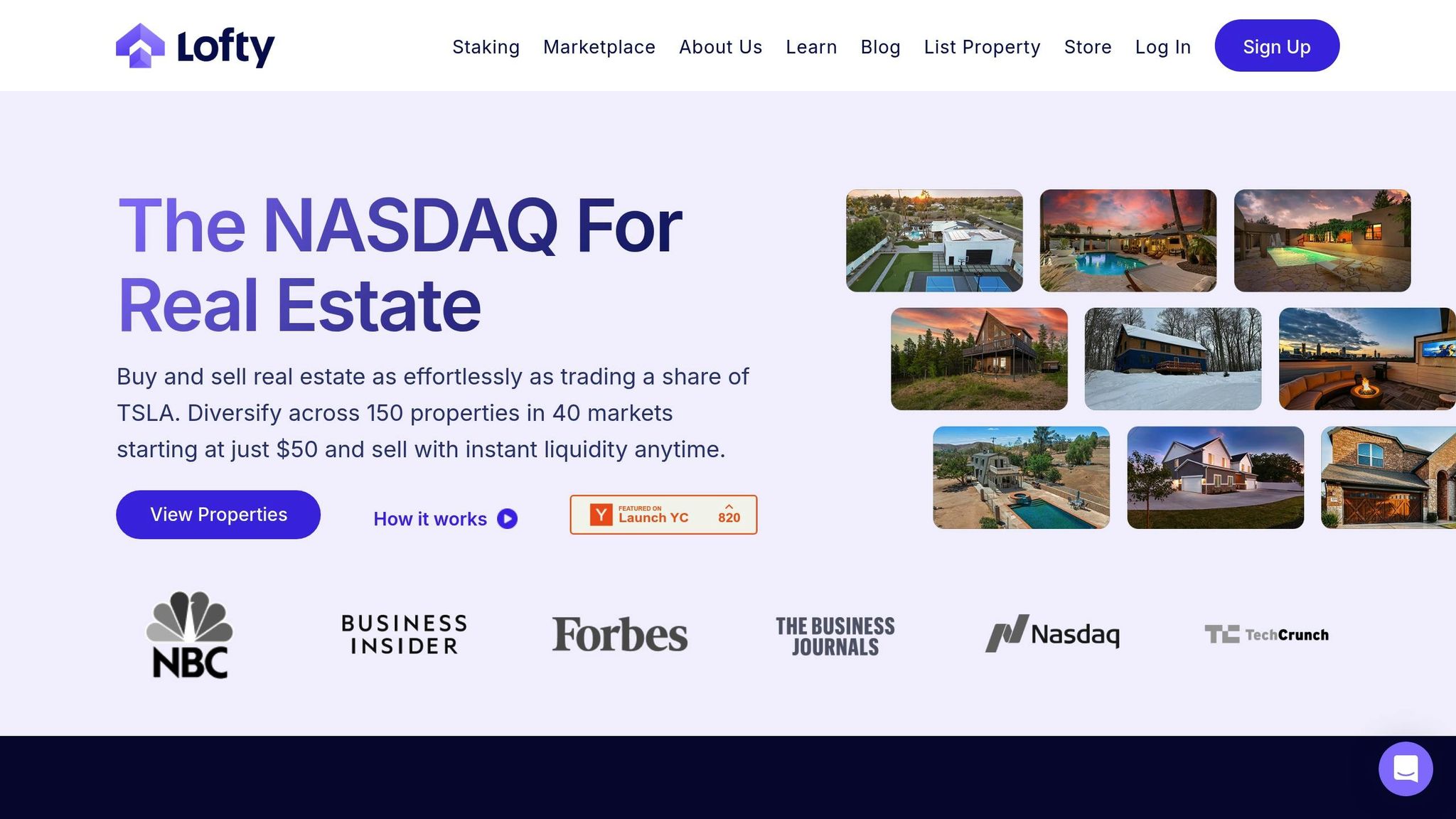
"Buy and sell real estate as effortlessly as trading a share of TSLA." – Lofty.ai
Lofty also provides instant liquidity. You’re not tied down by lock-up periods; you can list your shares for sale on a secondary marketplace whenever you want. Daily rental income is deposited directly into your account, ready for withdrawal or reinvestment. Professional property managers handle the day-to-day operations, while you maintain voting rights on key matters like repairs or rent adjustments.
Now, let’s walk through the simple steps to start buying property shares on Lofty.
Steps to Buy Property Shares on Lofty
Getting started is straightforward. First, sign up and create an account on Lofty.ai. The process takes just a few minutes. Once you’re in, browse the marketplace to explore available rental properties. Each listing includes detailed insights like location, projected returns, inspection reports, and third-party appraisals.
When you find a property that fits your goals, you can purchase fractional shares instantly using fiat currency or cryptocurrency. Your rental income starts accruing the same day. Ownership is tokenized through the Wyoming LLC, and you can manually withdraw earnings or set up automatic reinvestment to grow your portfolio over time.
Lofty’s dashboard keeps everything at your fingertips. You can track daily rental income, monitor property performance, and even participate in governance votes. If you decide to sell, simply list your shares on the secondary marketplace and exit whenever you’re ready.
Why Choose Lofty for Real Estate Investing
Lofty offers several key advantages over traditional real estate investing. For starters, the platform uses a transparent pricing model, with real-time share values based on property appraisals and market trends. Every property undergoes thorough vetting, including third-party inspections, appraisals, and seller background checks.
The platform has already facilitated over $65 million in transactions and boasts a community of more than 34,000 registered investors. Backed by $6 million in venture capital funding, Lofty has built a strong reputation in the fractional real estate market.
Success stories from real investors highlight the platform's potential. In November 2023, for instance, Arrio Granum sold $110,000 worth of equity in an 8-unit mixed-use property in just one week. Initially priced at $55–$60 per fraction, those shares later traded for $77 on the secondary market. Similarly, Tristan Huerta, formerly with Investment.com, sold $20,000 in equity at $50 per fraction within minutes, followed by another $80,000 at $55–$60 per fraction.
Lofty also keeps fees minimal. Buyers pay a 3% fee, and sellers are charged a modest 3% fee when selling equity. Investors can take advantage of real estate tax benefits, such as depreciation, which are reflected in year-end 1099 forms. Whether you invest $50 or $50,000, you enjoy the same proportional perks as full property owners - daily income, property appreciation, and voting rights - without the stress of managing the property yourself.
Conclusion
Key Takeaways
Fractional ownership is reshaping how people invest in luxury real estate. Instead of needing a hefty sum for a down payment, you can start investing with as little as $50. This approach gives you access to real equity, daily rental income, and a diversified portfolio across various markets - all with professional management to handle the details.
Ownership is secured through a Wyoming LLC, ensuring you hold actual equity. When you're ready to sell, listing your shares on a secondary marketplace is both fast and cost-effective.
Lofty has simplified the process, making it seamless for investors. With over $100 million in transactions and a community of 34,000+ registered investors, the platform demonstrates that fractional ownership is more than just an idea - it’s a proven way to make real estate investment more accessible.
Ready to Get Started?
If traditional real estate feels out of reach, fractional ownership offers a simpler, more affordable path. Explore properties on Lofty.ai, review appraisals and projected returns, and find opportunities that align with your financial goals. It’s never been easier to take the first step into real estate investing.
FAQs
What’s the difference between fractional ownership and a timeshare?
Fractional ownership gives you deeded ownership in a property, meaning you share in the rights to make decisions, cover expenses, and benefit financially from things like property appreciation or rental income. It’s a true investment where you own a portion of the property.
On the other hand, a timeshare only grants the right to use a property for specific periods. It doesn’t offer actual ownership or financial perks - think of it more as a prepaid vacation plan without any equity involved.
What legal structures are used in fractional real estate ownership?
Fractional real estate ownership is often organized using structures like Tenancy in Common (TIC), Joint Tenancy, or Limited Liability Companies (LLCs). Each option comes with its own set of rules around ownership, responsibilities, and how shares can be transferred.
With TIC, multiple investors each hold a specific share of a property. What’s appealing here is the flexibility - owners can sell or transfer their share without needing approval from others. Joint Tenancy, however, includes a "right of survivorship", meaning if one owner passes away, their share automatically goes to the remaining owners. Then there’s the LLC route, which offers liability protection and allows for tailored management through operating agreements.
The best choice depends on what matters most to you - whether it’s protecting your assets, simplifying management, or planning for the future. Knowing these options can help you navigate the complexities of fractional ownership with confidence.
How can I sell my fractional ownership share in a property?
Selling your fractional ownership share doesn’t have to be complicated if you choose the right approach. One popular option is using a fractional real estate marketplace. These platforms make it easy to list your share, connect with interested buyers, and complete the sale - often with lower fees and a simple, user-friendly process.
Another route is selling directly to other co-owners of the property. This can cut down on marketing expenses and streamline the transaction, though it’s essential to have clear agreements in place to avoid misunderstandings. If you prefer professional guidance, a real estate agent familiar with fractional ownership can manage the process for you. While their services may come at a higher cost, they’ll handle the legal and logistical details, saving you time and effort.
Some fractional ownership arrangements also offer added flexibility, such as pre-arranged buyback agreements or access to secondary trading platforms. These options can provide liquidity and even allow for 24/7 trading, depending on the setup. Ultimately, the best method depends on your goals and how quickly you want to sell.
Lofty Editorial