Lofty Editorial
Case Study Roundup: Global Tokenized Real Estate Projects
Tokenized real estate is reshaping property investment by dividing ownership into digital tokens via blockchain. This allows people to invest in real estate with as little as $50, earn rental income (often daily in stablecoins like USDC), and trade their shares on secondary markets. Projects like Aspen Coin, Lofty, and Blockimmo showcase how this model is lowering barriers, improving liquidity, and attracting global investors. However, regulatory frameworks remain a critical factor in determining success.
Key Highlights:
- Aspen Coin: Tokenized a luxury resort in Colorado, offering perks like hotel stay discounts.
- Lofty: Made U.S. rental properties accessible with $50 minimum investments and daily income payouts.
- Blockimmo: Operates under Swiss law, tokenizing properties like a Lake Lucerne hotel.
- RealT: Focused on U.S. rentals but exited the U.S. market in 2023 due to regulatory challenges.
- Berkeley Square House: Europe’s first tokenized commercial property in London.
Quick Comparison:
| Project | Asset Class | Jurisdiction | Min. Investment | Liquidity Design | Secondary Market | Outcome |
|---|---|---|---|---|---|---|
| Aspen Coin | Hospitality | USA (Colorado) | $10,000 | Regulated ATS | tZERO (SEC-regulated) | $18M raised; fractional ownership perks. |
| Lofty | Residential Rentals | USA (Wyoming) | $50 | Hybrid PMM + order book | Internal marketplace | 150+ properties; $5.2M rental income paid. |
| Blockimmo | Hospitality/Residential | Switzerland | CHF 1,000 | Blockchain settlement | Yes | Simplified transactions under Swiss law. |
| RealT | Residential Rentals | USA (Delaware/WY) | $50 | P2P token trading | Internal marketplace | $2M+ rental income distributed by 2023. |
| Berkeley Square House | Commercial | United Kingdom | £5,000 | N/A | Yes | First tokenized commercial property in EU. |
Tokenized real estate is projected to grow from $0.3 trillion in 2024 to over $4 trillion by 2035. Regulation and secondary market liquidity will drive this transformation, making property investment more accessible globally.
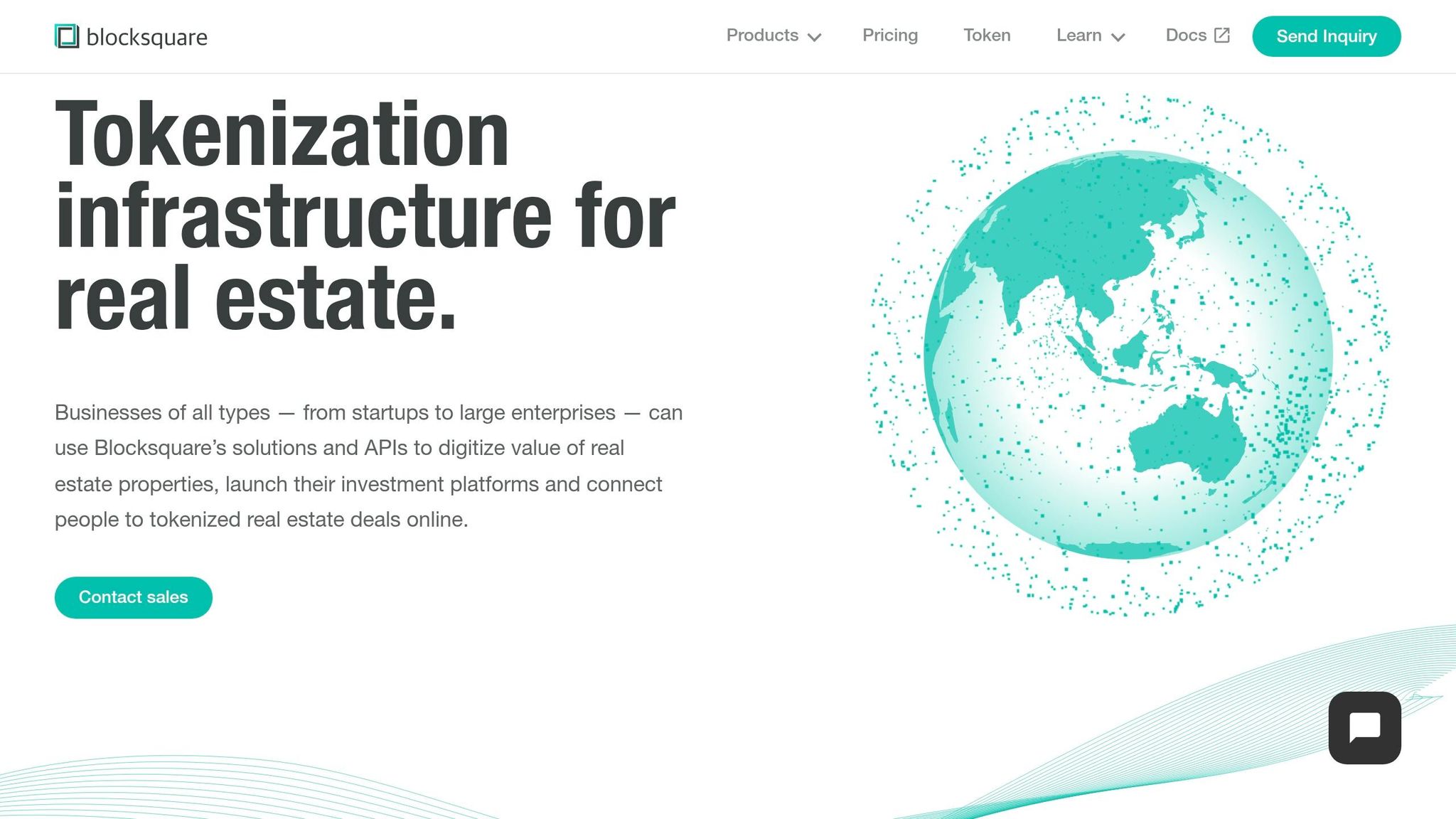
The Future of Real Estate Is Tokenized - Makram Hani, COO of BlockSquare, Explains
sbb-itb-a24235f
Global Tokenized Real Estate Projects Worth Knowing
Tokenized real estate is making waves globally, reshaping how properties are owned and traded. These projects - from a luxury resort in Colorado to a Swiss lakeside hotel - showcase how tokenization is breaking down barriers, enabling broader participation, and offering liquidity in real estate markets.
Aspen Coin: A Slice of the St. Regis Aspen Resort
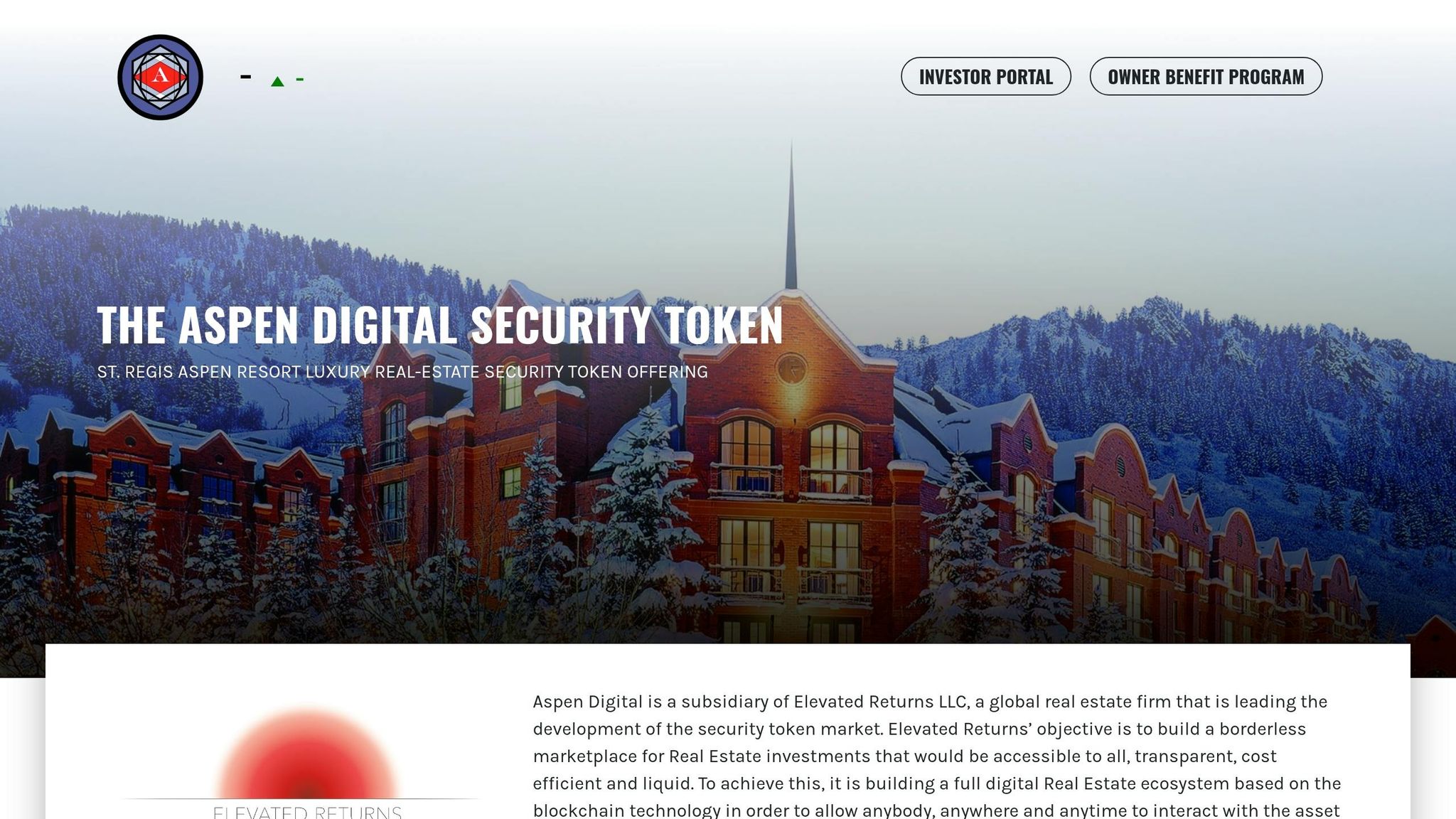
In 2018, Elevated Returns introduced Aspen Coin, tokenizing 18.9% of the 179-room St. Regis Aspen Resort in Colorado. This raised $18 million through a Reg D 506(c) security token offering on Indiegogo. Token holders didn’t just gain fractional ownership in a luxury property - they also enjoyed perks like cash rebates of 20% to 50% on hotel stays. As Tokenizer.Estate aptly stated:
"When your guests own part of the building, they come back."
The tokens later moved to the tZERO secondary market, offering investors an opportunity to trade their shares easily. This project highlights how tokenization can bring liquidity and added value to high-end assets.
Berkeley Square House: Breaking Ground in Europe
Berkeley Square House in London holds the distinction of being Europe’s first fully tokenized commercial property sale. This project proved that even large-scale office properties could be divided into digital tokens and sold via blockchain, providing a strong proof of concept for tokenized commercial real estate in Europe.
Blockimmo: Swiss Precision in Real Estate Tokenization
Switzerland’s Blockimmo operates under the Swiss DLT Act of 2021, which recognizes digital securities as legitimate financial instruments. Thanks to this regulatory clarity, Blockimmo successfully tokenized a hotel on Lake Lucerne, selling digital tokens to international investors. This project exemplifies how clear legal frameworks can remove uncertainty, paving the way for tokenized real estate. Platforms like Blockimmo and RealT are changing how investors access property markets.
RealT: Making U.S. Rental Properties Accessible
RealT took a bold step in fractionalizing U.S. rental properties, offering tokens priced around $50 and distributing rental income directly to token holders. While regulatory hurdles forced the platform to exit the U.S. market in 2023, it continues to serve international investors. RealT’s journey underscores an ongoing challenge: while the model works, regulatory issues remain a significant barrier.
Lofty: Simplifying Real Estate Investment
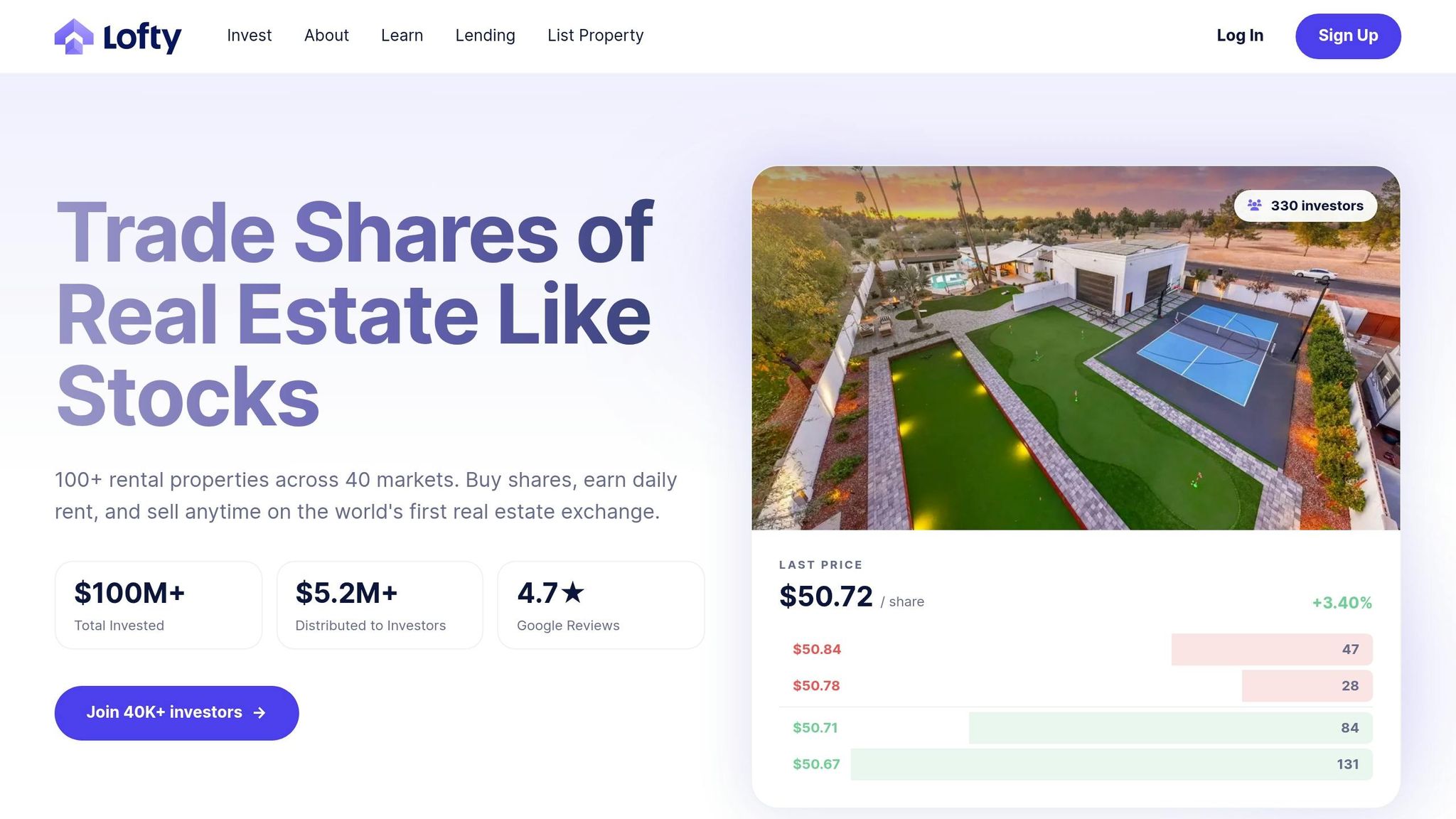
Lofty is redefining accessibility in real estate investing. Co-founder Jerry Chu shared the platform’s mission:
"If we could build a platform that not only helped them source available properties for sale but also allowed them to invest any amount they could afford instantaneously, then we would be able to truly disrupt the existing real estate investing process."
Lofty structures each property as a Wyoming LLC, with equity issued as Algorand Standard Assets (ASAs). Investors can start with as little as $50, earn daily rental income in USDC, and trade tokens on Lofty’s secondary marketplace. As of April 2026, the platform has tokenized over 150 properties, locking in $99 million in value and distributing $5.2 million in rental income, including $1.7 million in 2025. Investors also play an active role in property governance, voting on rent adjustments and repairs.
Key Lessons from Tokenized Real Estate Case Studies
These case studies highlight the key factors influencing the success and challenges of tokenized real estate, from driving adoption to addressing hurdles.
How Tokenization Improves Liquidity and Access
Tokenization transforms traditionally high-cost real estate assets into smaller, more affordable pieces, making them accessible to a broader audience. Platforms like Lofty have significantly reduced entry barriers, while projects like the AWWA Hotel in Bali attracted over 1,000 investors, with average contributions falling below $500. This approach also addresses real estate's liquidity issues. Secondary markets, such as tZERO (used for the St. Regis Aspen tokens) and Lofty's own trading platform, provide investors with exit options that traditional property ownership often lacks. For instance, in early 2026, bid-ask spreads for regulated European tokenized assets were reported at under 0.3%.
Smart contracts further streamline processes by automating tasks like rent distributions. Lofty, for example, pays rental income daily in USDC, while the AWWA Hotel project successfully distributed payouts to over 1,000 wallets on time, maintaining its projected 11.32% APR. Reflecting on this, Oleg Kurchenko, CEO of Binaryx, shared:
"When the first AWWA payout went out in October, I watched the Polygonscan transactions come through in real time... That moment mattered more to me than any pitch deck we've ever put together."
However, these liquidity benefits hinge on strong and clear regulatory frameworks.
Why Regulation Matters for Tokenized Real Estate
Regulation plays a pivotal role in determining whether projects succeed or fail. RealT's 2023 exit from the U.S. market serves as a cautionary example, where a functional model was halted due to regulatory challenges. On the other hand, well-defined regulations can boost investor confidence and improve liquidity. Dubai stands out as a leader in regulatory integration. On February 20, 2026, the Dubai Land Department launched Phase 2 of its tokenization initiative, enabling secondary trading of 7.8 million tokens tied to ten properties worth more than $5 million. Each blockchain trade is directly linked to the official property registry. Robert Farquhar, CEO of Ctrl Alt, emphasized:
"Tokenization achieves its full potential only when assets can move freely after issuance, and the secondary market delivers exactly that."
Institutional backing also suggests where the industry is headed. In June 2026, Goldman Sachs introduced a blockchain-native real estate fund in Luxembourg under the AIFMD framework. Mathew McDermott, Goldman's Global Head of Digital Assets, explained:
"Issuing blockchain native fund units on GS DAP® enables investment in real estate assets with precision while unlocking more seamless transferability in the future."
Clear regulatory frameworks not only attract capital but also lay the groundwork for sustainable growth.
Which Property Types Are Leading Tokenization Adoption
Different property types are embracing tokenization at varying speeds, driven by liquidity improvements and regulatory clarity. Hospitality assets, such as hotels and resorts, have been early adopters, offering token holders tangible benefits like stay discounts along with financial returns. These assets typically yield returns between 11% and 15%.
Residential rentals remain a popular choice for retail investors due to their affordability and steady cash flows. Meanwhile, commercial real estate - particularly logistics and warehousing - has become the fastest-growing segment as of 2026, propelled by e-commerce expansion and reliable corporate tenants. For example, RedSwan has tokenized over $5 billion in commercial real estate on the Hedera network. Ed Nwokedi, RedSwan's CEO, remarked:
"Tokenization is not just about fractionalizing assets. It is about fundamentally redefining ownership, enhancing liquidity, and creating a more transparent marketplace."
Data centers are also emerging as a promising asset class, driven by the rising demand for AI infrastructure and the suitability of long-term lease agreements for smart contract automation. By 2035, the tokenized real estate market is expected to grow to $4 trillion, with an annual growth rate of 27%. Of this, approximately $2.4 trillion will be tied to commercial property loans and securitizations.
Comparison Table: Global Tokenized Real Estate Projects
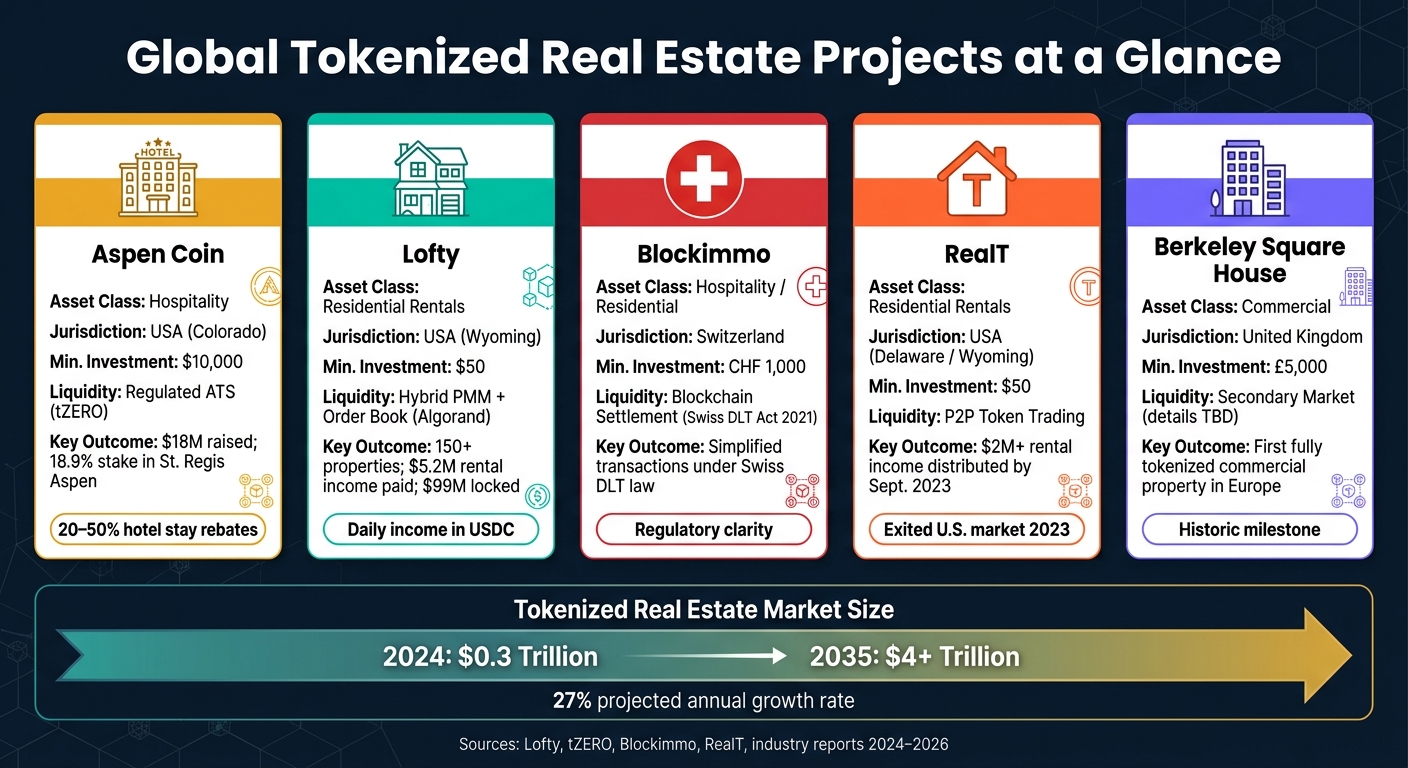
Global Tokenized Real Estate Projects: Side-by-Side Comparison
These five projects differ significantly in structure, target investors, and outcomes. The table below highlights these distinctions.
When it comes to minimum investment, the range is broad. Lofty and RealT both start at just $50, making them accessible to everyday investors. On the other hand, Aspen Coin requires a hefty $10,000 minimum, catering to wealthier individuals or institutional buyers. Blockimmo sets its floor at CHF 1,000, while Berkeley Square House requires £5,000 for its European commercial property offering.
Liquidity also varies across projects. Lofty uses a hybrid PMM and order-book system on Algorand for quick execution. Aspen Coin relies on tZERO, a platform regulated by the SEC, and Blockimmo settles trades directly on the blockchain, enabled by Switzerland's 2021 DLT Act.
| Project | Asset Class | Jurisdiction | Min. Investment | Liquidity Design | Secondary Market | Notable Outcome |
|---|---|---|---|---|---|---|
| Aspen Coin | Hospitality | USA (Colorado) | $10,000 | Regulated ATS | tZERO (SEC-regulated) | $18M raised; 18.9% stake in St. Regis Aspen |
| Berkeley Square House | Commercial | United Kingdom | £5,000 | N/A | Yes | First fully tokenized commercial property sale in Europe |
| Blockimmo | Hospitality/Residential | Switzerland | CHF 1,000 | Blockchain settlement | Yes | Simplified transactions under Swiss DLT law |
| RealT | Residential rentals | USA (Delaware/WY) | $50 | P2P token trading | Internal marketplace | $2M+ in rental income distributed by Sept. 2023 |
| Lofty | Residential rentals | USA (Wyoming) | $50 | Hybrid PMM + order book | Internal marketplace | $5.2M cumulative rental income through 2025; 150+ properties across 11 states |
These comparisons show how factors like investment minimums, liquidity mechanisms, and jurisdiction shape tokenized real estate outcomes. Residential rental projects like Lofty and RealT stand out for their low entry points and frequent income distributions - Lofty even pays rental income daily in USDC. Meanwhile, hospitality-focused projects, such as Aspen Coin, offer potentially higher yields but are more vulnerable to occupancy fluctuations. Commercial ventures, such as Berkeley Square House, require larger investments but tend to provide more stable cash flows.
Jurisdiction plays a pivotal role in everything from legal protections to exit strategies. U.S.-based projects operate under SEC regulations (like Reg D or ATS structures), Switzerland benefits from its DLT Act, and Berkeley Square House has demonstrated that tokenizing commercial properties in Europe is feasible, though still at an early stage. This comparison underscores how regulatory frameworks and asset types influence investment accessibility and liquidity in the evolving tokenized real estate market.
Conclusion: Where Tokenized Real Estate Is Headed
The case studies - like Lofty's daily rental income distributions across more than 150 U.S. properties - show that tokenized real estate is no longer just a concept; it’s a practical and growing market. By February 2026, the total value of real-world assets on blockchain hit $25 billion, a staggering 300% increase from $6.3 billion just a year earlier.
Regulation is the key driver shaping this market’s future. The question has evolved from "is this legal?" to "what framework works best?". Jurisdictions including the U.S., EU, UAE, and Singapore now have established frameworks, with initiatives like Dubai's Land Department using blockchain for over 40% of new property registrations. These efforts highlight the potential for secondary markets to operate at scale.
Accessibility is another major factor fueling growth. Platforms like Lofty, with a $50 minimum investment, are opening up real estate income to everyday investors. For example, in 2025, $1.7 million in rental income was distributed through these platforms. This growing accessibility lays the groundwork for the sector’s rapid expansion.
Looking ahead, projections estimate that tokenized real estate will grow from under $0.3 trillion in 2024 to more than $4 trillion by 2035. However, continued progress depends on strong regulatory frameworks, liquid secondary markets, and reliable platform performance. As Barry Sternlicht, Chairman and CEO of Starwood Capital, put it:
"The technology is superior... It's a fantastic thing for the world - the world just has to catch up with it."
The next chapter for tokenized real estate will focus on scaling innovations like fractional ownership, blockchain-based settlement, and programmable income distribution, transforming it into a truly global asset class.
FAQs
Are tokenized real estate tokens legally recognized where I live?
In the United States, real estate tokens are generally treated as securities. This means they must follow regulations such as Reg D, Reg A+, or Reg S. Whether these tokens are legally recognized depends on how well they comply with these rules and the legal structure of the platform offering them.
How can I sell my tokens if I need cash quickly?
You can sell your tokens on the Lofty Marketplace with ease by listing them directly for other investors to purchase. The platform provides a high level of liquidity and applies a 3% transaction fee, allowing you to turn your tokens into cash quickly.
How are rental payouts calculated and paid to token holders?
Rental payouts are determined by the rental income generated from each property and are distributed in proportion to the ownership shares held by token holders. Lofty streamlines the process by automating daily payouts through smart contracts. Every transaction is securely recorded on the blockchain, providing a clear and transparent ledger.
Lofty Editorial