Lofty Editorial
Ultimate Guide to U.S. Fractional Property Market Trends
Fractional property investing in 2026 offers a way to enter real estate markets with low capital, diversify across regions, and earn rental income or benefit from property value growth. Key trends include:
- Geographic Focus: Midwest and Northeast markets show strong potential due to affordability and limited supply, while the Southeast leads in migration and job growth.
- Economic Shifts: Slowing rent growth (1.0%) and rising home prices (2.2%) highlight the need for balanced portfolios combining high-yield and growth-oriented properties.
- Market Opportunities: Cities like Dallas, Jersey City, and Green Bay stand out for their economic growth, rental demand, and investment prospects.
- Challenges: Rising insurance costs and property taxes (up 30% in 2025) impact net returns, making careful market selection crucial.
- Remote Work Influence: Secondary markets and suburbs gain traction as remote workers prioritize affordability and space.
Investors who compare real estate investing platforms find that these services simplify property management and offer liquidity, allowing investors to spread risk across multiple markets for as little as $50. Understanding regional trends, demographics, and economic conditions is key to navigating this evolving market.
How Geographic Trends Affect Fractional Real Estate
Where a property is located plays a huge role in determining whether your fractional investment brings in steady rental income, long-term value growth, or a mix of both. One key metric to consider is the price-to-rent ratio - it measures the balance between monthly rental income and potential appreciation over time. For example, cities like Cleveland and Indianapolis are known for their low price-to-rent ratios, earning them the nickname "Cash Flow Kings" because they offer higher rental yields. On the other hand, pricier coastal markets with higher price-to-rent ratios tend to provide lower rental returns, making investors more dependent on long-term appreciation. This metric is essential for understanding how to diversify geographically.
Recent data from 2026 highlights a challenge: rent growth slowed to 1.0%, while home prices increased by 2.2%. This trend squeezes profit margins, especially in areas where price-to-rent ratios are already high. For fractional investors, this underscores the importance of geographic diversification. Combining high-yield properties in the Midwest with growth-oriented investments in the Sunbelt can help balance returns across a portfolio.
"Attractive real estate markets are determined by a combination of demographic growth and supply constraints, with the Northeast and Southeast regions currently seen as particularly favorable." - PwC and Urban Land Institute
Population trends and migration patterns are also driving forces behind rental demand. In 2025, Texas reclaimed its position as the top destination for movers, followed by Florida, North Carolina, Tennessee, and South Carolina. Meanwhile, California has led the nation in net out-migration for six consecutive years. These shifts open up opportunities in emerging markets, especially in the Southeast, where affordability and career opportunities attract college graduates. Notably, the Southeast holds the highest average real estate prospect rating of 2.90 for 2026.
Economic conditions in different regions add another layer of complexity. "Primary Markets" - large metropolitan areas with over 3 million payroll workers, such as Dallas, Miami, and Jersey City - stand out for their investment potential. These cities score an average of 3.08 out of 5.0 for investment prospects, surpassing the national average of 2.81. They offer robust demand, stable environments for fractional platforms, and indicators like job growth, per capita income, and sector diversity that suggest sustained rent and occupancy rates. Dallas-Fort Worth, for instance, mirrors the national economy with its diverse industries and is projected to surpass 10 million residents by 2030, making it a resilient and attractive choice for investors.
sbb-itb-a24235f
Best U.S. Markets for Fractional Property Investments in 2026
Top U.S. Fractional Real Estate Markets 2026: Emerging vs Established Comparison
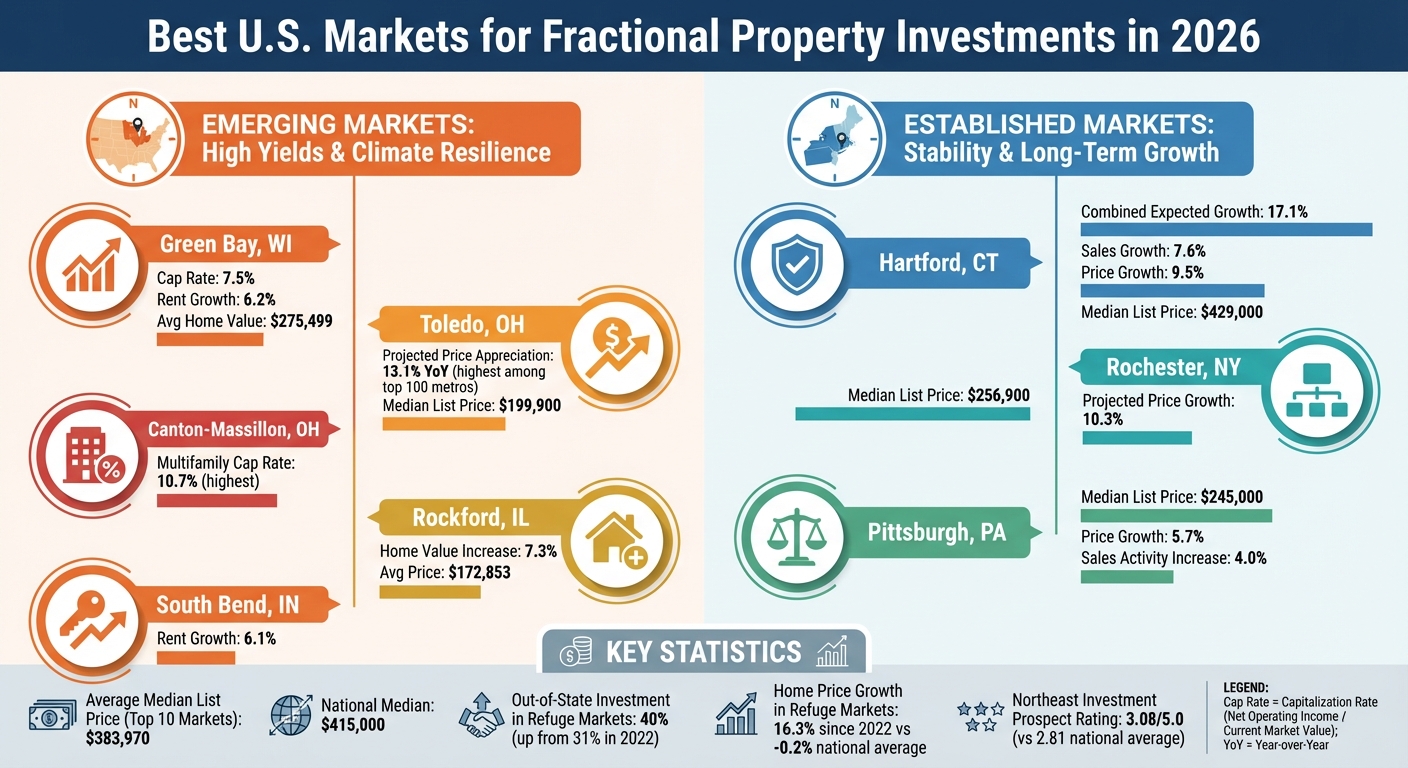
Fractional property investing is increasingly targeting markets where affordability meets strong economic fundamentals. In 2026, the average median list price across the top 10 housing markets is about $383,970 - well below the national median of $415,000. This makes these markets more accessible for fractional investors looking to enter the real estate space without the need for full property ownership.
Dallas/Fort Worth takes the top spot for real estate prospects, thanks to its diverse economy and strong job growth. Meanwhile, Jersey City and Brooklyn, ranked #2 and #4, highlight growing confidence in the Northeast. Investors are shifting focus from the oversaturated Sun Belt metros toward the Midwest and New England, where lower construction activity keeps vacancy rates tight and rent growth steady. Out-of-state investment in these so-called "refuge markets" rose from 31% in 2022 to 40% by the end of 2025, with home prices in these areas climbing an average of 16.3% since 2022. In contrast, the national average price change during the same period was just -0.2%. These conditions create a prime opportunity for fractional platforms like Lofty, allowing investors to build diverse portfolios without the need for full capital. Let’s dive into the specific markets shaping the investment landscape in 2026.
Emerging Markets to Watch
The Midwest is becoming a hotspot for fractional investors, offering a mix of affordability, rental demand, and climate resilience. Green Bay, Wisconsin stands out with a 7.5% cap rate, 6.2% rent growth, and an average home value of $275,499. Multifamily vacancies in the area remain minimal, adding to its appeal. Toledo, Ohio is another standout, boasting the highest projected price appreciation among the top 100 metros - 13.1% year-over-year - while maintaining an affordable median list price of $199,900. Canton-Massillon, Ohio offers rental investors one of the highest multifamily cap rates at 10.7%, making it an attractive option for those seeking strong income potential.
In addition to solid yields, climate resilience is drawing attention to Great Lakes markets. As insurance costs rise in coastal areas, these inland regions are seen as safer bets. For instance, Rockford, Illinois saw a 7.3% increase in home values, with an average price of $172,853. South Bend, Indiana also posted impressive numbers, with 6.1% rent growth, signaling solid demand in areas that have traditionally flown under the radar.
Established Markets with Stable Returns
For those prioritizing long-term stability, established markets in the Northeast remain a reliable choice, even with higher entry costs. Hartford, Connecticut leads the pack with a combined expected growth of 17.1% - split between 7.6% sales growth and 9.5% price growth - and a median list price of $429,000. Limited inventory and a surge in new construction (at twice the national average) are driving price increases. Rochester, New York offers a more affordable option with a median list price of $256,900, projected price growth of 10.3%, and steady inventory turnover, thanks to smaller gaps between current and new mortgage payments. Meanwhile, Pittsburgh, Pennsylvania provides balance with a median list price of $245,000, 5.7% price growth, and a 4.0% bump in sales activity.
These Northeast markets offer stability through diversified economies, proximity to major economic hubs, and consistent rental demand. On average, they score 3.08 out of 5.0 on investment prospect ratings, outperforming the national average of 2.81. For fractional investors utilizing platforms like Lofty, these markets act as reliable anchors, balancing riskier investments in emerging areas with dependable, long-term returns.
Factors Driving Regional Real Estate Performance
The performance of real estate markets across U.S. regions in 2026 boils down to three main drivers: demographics, economic conditions, and lifestyle preferences. Together, these factors shape the dynamics of fractional property investments and regional trends.
Demographics are shifting demand. By 2026, Baby Boomers turning 80 will fuel demand for senior housing and wellness-oriented communities. At the same time, Millennials and Gen Z are gravitating toward affordable cities, especially those that offer career opportunities for recent graduates. This generational divide highlights the importance of understanding which age groups are influencing demand in specific markets.
Economic factors play a key role. Cities like Dallas-Fort Worth and Houston are leading the way for real estate investment, thanks to strong job growth. Projected income growth of over 3.6% in 2026 is expected to outpace inflation, which is set at 3%. Additionally, housing affordability is improving, with the affordability threshold dropping below 30% of median income for the first time since 2022, reaching 29.3%. This shift could encourage some renters to transition into homeownership.
"Attractive real estate markets are determined by a combination of demographic growth and supply constraints, with the Northeast and Southeast regions currently seen as particularly favorable." - Emerging Trends in Real Estate 2026
Regional performance shows clear differences. The Southeast (scoring 2.90) and South Central (2.89) regions are outperforming the Midwest (2.75) and West (2.68) in investment potential. Migration trends favor the Southeast and South Central due to job availability and limited housing supply. Meanwhile, the Northeast is gaining traction, with 67% of its markets showing upward trends as investors seek areas with tight supply and steady demand. The following sections dive into how generational shifts, migration, and remote work are reshaping these dynamics.
Generational and Migration Trends
Younger generations are reshaping the market. Millennials and Gen Z are prioritizing affordability and career opportunities over proximity to traditional economic hubs. This preference is driving demand in emerging markets.
Senior housing demand is rising. With Baby Boomers reaching their 80s, there’s a growing need for independent living and wellness-focused communities. Limited new supply and changing consumer expectations are creating new opportunities for fractional investors to diversify beyond single-family rentals.
Migration patterns highlight regional winners. The Southeast and South Central regions are leading, offering a mix of jobs, affordability, and lifestyle perks. For instance, Tallahassee, FL, climbed 36 spots in regional rankings from 2025 to 2026, moving into the top half of the list. On the flip side, high-cost coastal markets are seeing population outflows as residents seek more affordable options. Markets with a combination of demographic growth and housing shortages are becoming prime targets for fractional investors.
"From the rapid evolution of AI infrastructure to the growing demand for senior housing, the opportunities in 2026 will favor those who combine speed, data-driven insight, and a long-term strategic vision." - Andrew Alperstein, Partner, PwC
Income trends are reshaping opportunities. Tech-focused cities like San Jose and San Francisco are climbing the rankings, boosted by the stabilization of the AI sector, which is driving employment and increasing per capita income. For fractional investors, understanding the quality of jobs and the income they generate is critical for identifying areas with strong rental demand and potential property value growth.
How Remote Work Affects Regional Demand
Remote work is changing the rules. As of April 2025, 34.3 million Americans worked remotely, a shift that has significantly reduced the importance of job location in home-buying decisions. This trend, which represents 40 years of pre-pandemic growth, is reshaping how investment capital flows into different markets.
Secondary markets and suburbs are thriving. Remote workers are prioritizing space and lifestyle amenities over proximity to city centers. For example, Washington State leads the nation with 37% of its workforce working from home, compared to a national average of 15%. Idaho, named the hottest real estate market for 2026, boasts 91 new home builds per 10,000 residents and a 10.2% rent growth rate. These shifts present opportunities for fractional investors, offering lower entry costs and strong rental demand.
"If I can work from anywhere, I'm going to live in a less expensive city." - Andy Warren, Director of Real Estate Research, PwC
Property features are now key investment factors. Remote workers demand reliable high-speed internet - 89% consider it a top priority. Homes with dedicated office spaces or flex areas are commanding higher rental rates and resale values. Investors need to evaluate properties not just by their size or location but also by their appeal to remote workers.
Mortgage rates are reshaping the rental market. Homeowners locked into sub-4% mortgage rates are hesitant to sell and move into a 6.3% rate environment. This has slowed existing-home sales, pushing more people toward new construction and rentals. For fractional investors, this trend creates a unique opportunity as demand for rentals remains strong. The average rent for a one-bedroom apartment rose to $1,301 per month in 2024, up from $1,042 in 2021, reflecting the strong pricing power in markets popular among remote workers.
Measuring Risk and Return in Fractional Investments
Fractional investing requires a different approach to evaluating risk compared to traditional property ownership. Instead of putting all your capital into a single property, fractional platforms let you diversify investments across multiple markets, often with entry points as low as $50 per token. This diversification helps reduce the impact of regional economic fluctuations that might affect a single location.
For successful fractional investing, data is key. Metrics like rental demand, the quality of property management, and appreciation rates in specific zip codes are essential to making informed decisions. Unlike traditional real estate, where liquidity can be a major hurdle, fractional platforms offer instant liquidity. You can sell your holdings whenever you choose, bypassing the lengthy process of waiting for a property sale. This model, often described as a "NASDAQ for Real Estate", minimizes the liquidity risks typically associated with property investments.
These platforms handle the operational side of property management - things like tenant screening and maintenance - while still giving investors governance rights. For example, you can vote on decisions like selling a property or changing property managers. It's crucial to ensure your chosen platform provides these voting rights, as they allow you to maintain some level of control over your portfolio. This setup also enables you to compare risk profiles across various market types effectively.
Risk Profiles of Primary vs. Secondary Markets
Primary markets, such as New York City or San Francisco, offer stability thanks to their large tenant pools and strong economic foundations. However, the high entry costs in these markets often result in lower yields. On the other hand, secondary markets like Columbus, Indianapolis, and Kansas City present opportunities for higher growth, albeit with greater volatility. These cities often benefit from factors like demand driven by universities, diverse job markets, and infrastructure development.
Energy-efficient properties can also significantly enhance returns. For example, properties with retrofits or solar installations can boost returns by over 50% and attract tenants willing to pay premium rents. Offices in areas with lifestyle amenities can command rent premiums of up to 30%. Whether you're investing in primary or secondary markets, prioritizing properties with energy-efficient features can be a smart move. Understanding these risks and opportunities is essential before diving into the regulatory aspects.
Regulatory Considerations for Fractional Investors
Regulatory compliance plays a critical role in fractional investing. Ownership is typically structured through Special Purpose Vehicles (SPVs), which must adhere to securities regulations. Real estate tokens are classified as security tokens, meaning they must be issued through regulated platforms and comply with specific protocols. Investors are also required to complete mandatory KYC (Know Your Customer) and AML (Anti-Money Laundering) checks. Additionally, platforms must align blockchain token registries with legal property records to ensure ownership rights are secure.
Local zoning laws and land-use policies also have a direct impact on investment outcomes. As Robert Dietz, chief economist at the National Association of Home Builders, explains:
"A major limitation on the supply side comes to zoning and land-use policies".
These regulations can limit the density required for affordable housing developments, which in turn affects regional supply and property values. Conducting thorough research into local zoning rules is essential before committing to an investment in a specific area.
Recent shifts in regulations are also creating new opportunities for fractional investors. For instance, private real estate and fractional tokens can now be included in retirement accounts like 401(k) plans. The tokenized real estate market is expected to surpass $4 trillion by 2035, with a compound annual growth rate of over 27%. Staying informed about these policy changes can help you identify new opportunities and better understand how market dynamics are evolving.
2026 Market Outlook for Fractional Real Estate
The fractional property market is stepping into what economists are calling "The Great Housing Reset" - a period where housing affordability is expected to improve as income growth finally starts to outpace home-price increases. For fractional real estate investors, this marks a shift from the turbulence of recent years to a more stable and predictable environment.
Mortgage rates are projected to average 6.3% in 2026, slightly lower than the 6.6% average in 2025. By mid-January 2026, the average 30-year fixed mortgage rate had already dipped to 6.06%, the lowest seen since September 2022. This drop has sparked a surge in both purchase and refinance activity, as noted by Sam Khater, Chief Economist at Freddie Mac:
"weekly purchase and refinance activity has surged, benefiting buyers and current owners alike"
. For fractional platforms that rely on leverage, these lower rates can reduce borrowing costs and boost the net returns distributed to investors.
The housing market is also undergoing a rebalancing that benefits fractional strategies. Inventory is anticipated to grow by 8.9% year-over-year, offering platforms a wider and more stable range of properties to choose from. Meanwhile, existing-home sales are expected to rise 1.7% to 4.13 million units, and median home prices are projected to see a modest increase of 2.2%. Perhaps most notably, the typical mortgage payment is forecast to drop below 30% of the median income for the first time since 2022, reaching 29.3%. This improvement in affordability is likely to support consistent tenant demand in rental markets, creating opportunities for steady cash flow.
However, rising costs remain a concern. Insurance premiums and property taxes surged by 30% in 2025 and are expected to continue outpacing inflation in 2026. In states like Florida and Colorado, insurance escrow increases reached 55-57% in 2025, adding significant "hidden" costs to property ownership. These expenses can eat into net returns, even if rental income remains stable, so investors should carefully evaluate these factors before committing to fractional shares.
On the rental side, national rents are forecast to decline by 1.0% in 2026. The South and West are experiencing the sharpest drops due to high levels of multifamily construction, while the Northeast and Midwest, where supply is tighter, are maintaining firmer prices. Investors should focus on markets with limited new construction and strong job growth to sustain rental demand. With home price growth slowing to around 2%, rental income will play a larger role in driving returns in 2026. This shift underscores the importance of prioritizing stable cash flow over speculative property appreciation in the evolving real estate landscape.
Key Takeaways for Investors
Geographic trends, risk factors, and market dynamics all play a role in shaping fractional investments. Here are some essential points to consider:
Prioritize geography. Markets in the Sun Belt, such as Dallas, Austin, and Phoenix, often face oversupply. On the other hand, secondary markets in regions like the Midwest and New England - think Green Bay, WI (6.2% rent growth, 7.5% cap rate) or Canton-Massillon, OH (10.7% cap rate) - present strong opportunities. Don’t overlook FEMA vulnerability ratings to assess climate risks.
Diversify to manage risk. Avoid putting all your investments in one state. Spread your portfolio across three or four regions, such as the Midwest, New England, and South Central areas. This approach helps reduce exposure to regional downturns. With entry points as low as $50, achieving diversification has never been more accessible.
Let data guide your decisions. Focus on markets with cap rates above 7% and vacancy rates below 5%. Keep an eye on construction activity - markets with shrinking supply often offer better pricing power and less institutional competition. This data-driven strategy also helps in evaluating liquidity and fee structures.
Examine liquidity and fees carefully. Look for platforms that provide secondary marketplaces and keep fees minimal. Avoid platforms with high property management or acquisition charges. Daily rental distributions can further enhance compounding returns.
Preparation is key. Stick to areas with limited supply and high demand. Stay informed on local economic conditions and regulatory changes to seize new opportunities as they arise. A thoughtful, well-researched approach can make all the difference in the long run.
FAQs
How does investing in properties across different locations impact returns in fractional real estate?
Investing in properties across different regions in the U.S. can be a smart way to boost returns while reducing risks in fractional real estate. Spreading your investments geographically helps shield your portfolio from issues like local economic slumps, shifts in job markets, or changes in regulations that could hurt rental income or property values. If one region struggles, the gains in another can help balance things out.
By including properties in high-demand cities, expanding suburbs, and up-and-coming markets, you can enjoy more stable cash flow and long-term growth in property value. This strategy also positions you to tap into opportunities in areas with population growth, new infrastructure, or strong economic momentum, building a portfolio that’s both resilient and profitable.
A well-balanced fractional real estate portfolio often offers steady annual returns, typically between 5% and 9%. It also reduces the risks tied to focusing on a single property or market, delivering more consistent performance and improving your chances of reaching your financial goals.
What risks should I be aware of when investing in fractional properties?
Investing in fractional properties comes with its share of risks, and it’s crucial to weigh them carefully. Market risk is a key concern, as property values can fluctuate due to shifts in local economic conditions, interest rates, or inflation. These factors might influence both the value of your share and the rental income you receive. Then there’s liquidity risk - selling your fractional share isn’t always quick or easy, particularly during economic downturns, and you might have to settle for a lower price than expected.
Another consideration is platform risk, which arises from relying on the marketplace that manages your investment. Issues such as security breaches or poor governance within the platform could create complications. You should also be aware of legal and tax uncertainties, as the regulations surrounding fractional and tokenized real estate are still evolving. These changes could potentially lead to unforeseen liabilities. Lastly, technology risks - like errors in smart contracts or vulnerabilities in blockchain systems - could disrupt transactions or compromise ownership records.
To navigate these risks more effectively, look for platforms that prioritize transparency, maintain strong security measures, and offer active secondary markets for trading shares. Spreading your investments across multiple properties and locations is another way to reduce exposure to potential setbacks.
How do demographic changes and migration patterns impact the fractional real estate market?
Demographic changes and migration patterns are key drivers in the fractional real estate market. Younger generations, particularly Millennials and Gen Z, are at the forefront, with around 60% of fractional investors being under 40. These tech-savvy individuals value affordability, flexibility, and diversification, which explains the rising popularity of platforms that provide low-cost entry, instant trading options, and blockchain-based ownership. Urban areas with strong job prospects and reliable internet infrastructure tend to draw these investors, increasing demand and boosting rental yields.
Migration trends also play a big role. Regions with growing populations - whether due to job opportunities, affordable housing, or attractive amenities - often see higher demand for rental properties. This can lead to increased rental income and property value growth. Conversely, areas with shrinking populations may face slower rent growth and appreciation, though they might appeal to long-term investors with lower initial costs. By keeping an eye on these trends, investors can strategically diversify their portfolios across thriving cities, up-and-coming suburban areas, and other promising locations to balance risks and optimize returns.
Lofty Editorial