
Co-Ownership Maintenance: Roles and Responsibilities
Jerry Chu
Managing a co-owned property requires clear agreements, financial planning, and regular communication. Here’s what you need to know:
- Cost Sharing: Maintenance expenses are typically divided based on ownership percentage. For instance, a 10% owner pays $300 annually if the property uses the "1% Rule" on a $300,000 property.
- Funding Methods: Co-owners can contribute to a shared fund monthly or pay for expenses as they arise. A reserve fund reduces financial stress during emergencies.
- Management Options: You can hire a property manager (higher cost, less time commitment) or manage the property yourself by buying fractional real estate (lower cost, more effort required).
- Key Maintenance Tasks: Regular inspections, cleaning, and preventative measures like gutter cleaning or HVAC servicing help maintain property value.
- Responsibilities: Co-owners must pay their share on time, participate in decisions, and follow agreements to avoid disputes or legal issues.
A clear co-ownership agreement and open communication are essential for success. Whether you choose professional management or self-management, proactive planning ensures smoother operations and protects your investment.
How Do Multiple Owners Make Property Management Decisions?
sbb-itb-a24235f
How Maintenance Costs Are Split Among Co-Owners
When it comes to maintenance costs, co-owners typically pay according to their ownership percentage. In a Tenancy in Common (TIC) arrangement - commonly used in fractional ownership - this proportional split is the legal standard.
For example, let’s say a property needs a $3,000 roof repair. If you own 15% of the property, your share would be $450. If one co-owner covers the entire cost upfront, they are entitled to reimbursement based on ownership percentages. This ensures fairness, particularly during emergencies when not everyone can contribute immediately.
Although splitting costs by ownership percentage is standard, co-owners can agree on customized arrangements. These agreements might consider factors like unequal property usage or variations in initial down payments. However, when it comes to external obligations, such as mortgages, all co-owners are generally jointly and severally liable. This means a lender can demand full payment from any one owner if others default.
Proportional Cost-Sharing Models
In most cases, expenses are divided based on ownership percentages. Fixed costs - like property taxes and insurance - follow this principle. For instance, if annual property taxes total $6,000 and you own 20%, your share would be $1,200. The same logic applies to routine maintenance, such as landscaping at $50 per month, where a 20% owner would pay $10, and capital expenses like replacing a water heater.
To estimate annual costs, co-owners often rely on budgeting strategies:
- 1% Rule: Set aside 1% of the property’s value annually for maintenance. For a $300,000 property, this means $3,000 per year, or $300 for a 10% owner.
- Square Footage Rule: Allocate $1 per square foot annually. A 2,000-square-foot home would require $2,000 for maintenance funds.
- 50% Rule: Reserve 50% of the annual rental income for operating expenses, including maintenance and taxes.
These frameworks help clarify financial responsibilities, as shown in the table below:
| Expense Category | Typical Cost | 10% Owner's Share |
|---|---|---|
| HVAC Servicing | $150–$200 per visit | $15–$20 |
| Interior Painting | $1–$3 per sq. ft. | Varies by area painted |
| Carpet Replacement | $2–$5 per sq. ft. | Varies by area |
| Pest Control | $150 minimum | $15 |
| Property Management | 6%–10% of monthly rent | Approximately 0.6%–1% of monthly rent |
For larger expenses, like an $8,000 roof replacement with five years of remaining life, setting aside about $133 per month ensures funds are available when needed. A 10% owner would contribute roughly $13.30 monthly toward this expense.
Budget-Based vs. As-Needed Assessments
When managing shared costs, co-owners must decide how to fund maintenance. Two common approaches are regular contributions to a shared fund or paying expenses as they arise - each with its own pros and cons.
With a budget-based fund, co-owners contribute a fixed amount monthly - say $100 for a 10% owner - into a shared account. This method creates a financial cushion for emergencies, like burst pipes or furnace failures, and supports long-term planning for major repairs. It also reduces disputes by clarifying financial obligations upfront.
On the other hand, the as-needed model requires co-owners to pay only when repairs occur. While this eliminates routine payments, it can cause financial stress during unexpected emergencies. For instance, a $5,000 plumbing repair would demand an immediate $500 from a 10% owner. This model may also lead to disagreements over whether repairs are necessary or their costs justified.
Experts often recommend setting aside at least $500 annually for emergency repairs. Additionally, co-owners should account for a 5% vacancy rate - equivalent to about one vacant month every 20 months - which could impact rental income used for maintenance.
Third-Party Management vs. Owner-Managed Maintenance
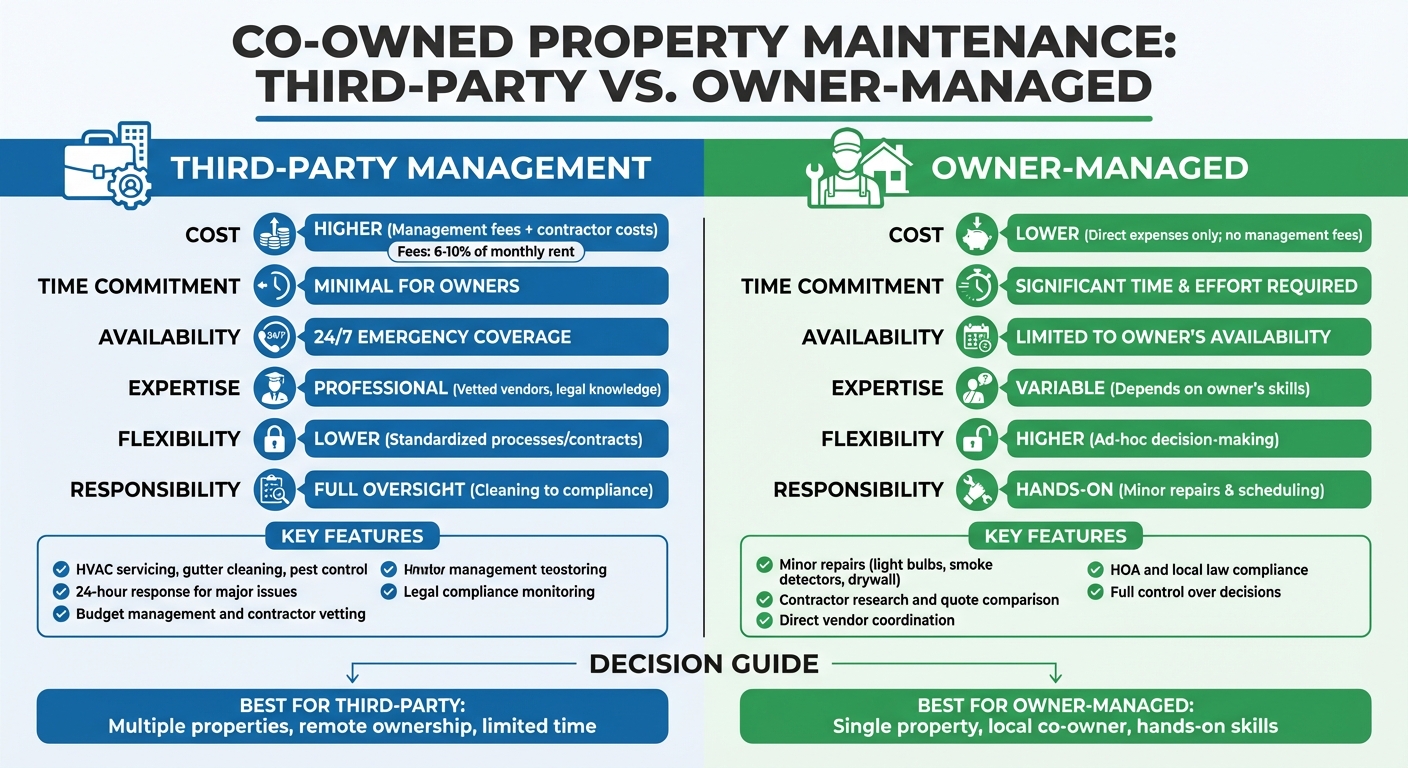
Third-Party vs Owner-Managed Property Maintenance Comparison
Once you've sorted out cost-sharing, the next big decision is figuring out who will handle the maintenance. You can either hire a professional property manager or take care of everything yourself. Both options have their own pros and cons, and the right choice depends on your specific situation.
So, is hiring a property manager worth it? According to Investopedia:
If the cost of a property manager is less than the opportunity cost of managing properties yourself, it's probably a good investment.
Professional managers typically charge either a flat monthly fee or a percentage of the rental income. While this does add to your expenses, it also saves you time and reduces stress - especially if you live far from the property or don’t have much experience with maintenance.
On the other hand, managing the property yourself eliminates management fees and gives you full control over vendor selection and repair decisions. But it also means you’ll need to invest significant time and effort. That includes handling everything from routine maintenance schedules to late-night emergency calls. If you or a co-owner has skills like plumbing or electrical know-how, self-management can work well for minor repairs. However, for major issues like a roof replacement or extensive electrical work, you'll still need to hire licensed professionals, regardless of your approach.
Here’s a breakdown of what each management style involves.
Third-Party Management Responsibilities
Hiring a professional manager means handing over a wide range of maintenance tasks, including routine, preventative, and emergency work. This covers things like HVAC servicing, gutter cleaning, and pest control. If the property is a multi-unit building, they’ll also take care of common areas, managing landscaping, garbage disposal, and cleaning shared spaces.
For emergencies, professional managers offer 24/7 support. Whether it’s a burst pipe in the middle of the night, a heating issue during winter, or a security problem, they’re equipped to respond immediately. In fact, they’re generally expected to resolve major livability issues within 24 hours of a complaint.
Beyond maintenance, professional managers handle administrative and legal duties. They manage budgets, vet and hire contractors, keep detailed records of repairs, and ensure compliance with local housing codes and safety regulations. This is especially important because, as the property owner, you remain legally responsible for accidents - like someone slipping on unsalted ice - even if you’ve delegated maintenance. Additionally, some states require property managers to hold specific licenses. For example, in Florida, certain activities require a real estate broker’s license.
Owner-Managed Maintenance Tasks
If you decide to handle maintenance yourself, expect a hands-on approach with plenty of flexibility. You’ll be responsible for minor repairs like changing light bulbs, replacing smoke detector batteries, or patching drywall. For more complex issues, you’ll coordinate with licensed professionals.
Managing maintenance yourself also means taking charge of service coordination. This involves researching contractors, comparing quotes, and supervising projects like electrical work, major plumbing repairs, or roof replacements.
You’ll also need to stay on top of compliance monitoring. This includes ensuring the property meets HOA rules and local laws. Regular property inspections and keeping up with changing regulations will be part of your responsibilities.
Comparison Table: Third-Party vs. Owner-Managed
| Feature | Third-Party Management | Owner-Managed |
|---|---|---|
| Cost | Higher (management fees + contractor costs) | Lower (direct expenses only; no management fees) |
| Time Commitment | Minimal for owners | Significant time and effort required |
| Availability | 24/7 emergency coverage typically included | Limited to the owner's availability |
| Expertise | Professional (vetted vendors, legal knowledge) | Variable (depends on the owner’s skills) |
| Flexibility | Lower (standardized processes/contracts) | Higher (ad-hoc decision-making) |
| Responsibility | Full oversight (cleaning to compliance) | Hands-on (minor repairs & scheduling) |
Ultimately, the best choice depends on your circumstances. If you own multiple properties, live far away, or don’t have the time to manage everything yourself, hiring a professional manager is often the better option. But if you’re dealing with a single property and at least one co-owner is local and skilled, self-management can be a practical and cost-saving approach.
Main Maintenance Management Categories
Managing a co-owned property effectively boils down to three main areas: usage and scheduling, accounting and payment tracking, and cleaning and damage prevention. Keeping these areas well-organized helps avoid conflicts and ensures the property retains its value.
Usage and Scheduling
In fractional real estate ownership setups, each co-owner is typically allocated a set amount of time to use the property annually, based on their ownership share. These shares often range from 1/8 to 1/2 of the property, equating to around six weeks to six months of usage per year.
To streamline scheduling and maintenance, co-owners can use a shared digital calendar. This tool can track occupancy and schedule essential tasks like HVAC servicing, gutter cleaning, or appliance inspections. Regular check-ins further help address minor issues before they escalate. Transparency in financial matters is another critical aspect of smooth co-ownership.
Accounting and Payment Tracking
Financial clarity is non-negotiable in co-ownership arrangements. Bruce Dannemeyer and Lawrence J. Dreyfuss from The Dreyfuss Firm emphasize this point:
Each co-owner is responsible to pay a pro-rata share of property expenses (mortgage, taxes, insurance, maintenance).
Setting up a shared fund where all co-owners contribute a fixed monthly amount ensures that expenses are covered fairly. Incorporating accounting software linked to a shared bank account can automate expense tracking and make managing recurring costs simpler.
Cleaning and Damage Prevention
Regular cleaning does more than just keep the property looking good - it’s a proactive way to catch potential issues early and prevent costly damage.
Between each occupancy, the property should undergo thorough cleaning and inspections. Tasks like checking for water leaks in kitchens and bathrooms, testing smoke and carbon monoxide detectors, and replacing HVAC filters are crucial. Seasonal upkeep is equally important: clearing gutters to prevent water damage, re-caulking showers to avoid mold, and flushing water heaters to remove sediment all contribute to the property’s longevity. Preventative steps, such as winterizing outdoor spigots to avoid burst pipes or clearing dryer vents, further protect the investment and reduce repair costs. These small but consistent efforts go a long way in maintaining the property’s condition and value.
Individual Co-Owner Responsibilities
When it comes to shared ownership, defining and adhering to individual responsibilities is critical. These roles ensure that the property is managed effectively and that all parties contribute their fair share. By maintaining clear expectations, co-owners can protect their investment and foster a successful partnership.
Timely Payment and Fee Compliance
Paying your share on time is non-negotiable in co-ownership. Each co-owner is responsible for covering their portion of mortgage payments, property taxes, homeowner's insurance, and repair costs. Missing a payment doesn’t just affect one person - it can create financial strain for all parties involved. If one owner defaults, the others might have to step in to cover the shortfall to avoid penalties or even foreclosure. Attorney Janelle Orsi from UC Berkeley School of Law explains:
"When you sign a mortgage with someone else, you become 'jointly and severally liable' for the mortgage, which means that both of you can be called upon to pay the full amount."
If one co-owner pays on behalf of another, reimbursement based on ownership percentages is typically required. To avoid such situations, many co-owners establish a shared reserve fund. This fund can cover unexpected repairs or help ensure payments are made on time.
Participation in Property Decisions
Financial contributions are only part of the equation. Co-owners also need to actively participate in property-related decisions. Major choices - like repairs, upgrades, or even selling the property - must be agreed upon collectively. In a Tenancy in Common arrangement, for example, all owners have equal rights to the property, regardless of their ownership share, making collaboration essential.
A written co-ownership agreement can help streamline this process. Such an agreement might detail how decisions are made, who can act in emergencies, and how disputes are resolved. Regular meetings - weekly or monthly - can keep everyone aligned on maintenance, financial goals, and property management concerns. Digital tools, like shared calendars or document platforms, can make it easier to track deadlines and stay organized.
Consequences of Non-Compliance
Failing to meet responsibilities doesn’t just strain relationships - it can lead to serious legal and financial consequences. If a co-owner doesn’t pay their share of expenses, others may initiate an "accounting action" to recover costs. In properties governed by Homeowners Associations, non-payment can result in fines, lawsuits, or even loss of property privileges.
In extreme cases, unresolved disputes or unpaid expenses may escalate to a partition lawsuit. This could result in a court-ordered physical division of the property or a forced sale, with the proceeds divided among the owners based on their shares. Such legal battles are costly and time-consuming, emphasizing the importance of clear agreements and open communication from the start.
Property Maintenance Monitoring and Communication
Regular Monitoring by Co-Owners
Keeping a close eye on the property is essential to catch problems early - whether it's a leaky faucet, a small crack in the foundation, or a water heater showing signs of wear. To stay on top of things, co-owners can rotate inspection duties and follow a standardized checklist. This checklist should cover essentials like HVAC systems, smoke and carbon monoxide detectors, pest activity, and areas prone to issues, such as basements and under-sink cabinets. Each co-owner brings a fresh set of eyes, increasing the chances of spotting something others might miss. As mentioned earlier, having a maintenance budget in place ensures that any issues can be addressed promptly. Early detection is only effective if paired with clear and timely communication.
| Maintenance Frequency | Key Monitoring Tasks |
|---|---|
| Monthly | Look for water leaks, test smoke/CO detectors, replace HVAC filters, check for pest activity |
| Quarterly | Inspect for pests, test GFCI outlets, check outdoor areas for hazards, reapply caulking in showers and tubs to prevent mold |
| Annually | Flush the water heater, clean gutters, schedule professional HVAC servicing, and conduct a full structural inspection (roof, siding, chimney) |
Communication Protocols for Maintenance
Good communication is just as important as regular inspections when it comes to maintaining a property. Co-owners should establish a clear system to ensure maintenance concerns are addressed quickly and efficiently. Regular check-ins - whether weekly or monthly - can help everyone stay on the same page about upcoming tasks and prevent small issues from becoming major problems. Tools like group chats or project management apps can make it easier to track deadlines, share updates in real-time, and document decisions.
A co-ownership agreement should outline how quickly maintenance issues need to be reported and addressed. When an issue is spotted, it’s a good idea to submit a written or digital report that includes details like the location of the problem, potential risks, and photos for reference. Keeping a record of all communications not only promotes accountability but also provides legal protection if disputes arise.
Conclusion
When it comes to co-ownership maintenance, having a solid plan in place is essential. The success of such arrangements rests on three core principles: clear agreements, thoughtful financial preparation, and regular communication. A written co-ownership agreement isn't just a formality - it’s the backbone of the partnership. This document lays out critical details like financial responsibilities, task delegation, and dispute resolution processes, ensuring everyone is on the same page. Without this structure, even minor maintenance issues can spiral into larger conflicts that can strain the relationship.
Financial preparedness is equally important. Setting aside around 1% of the property's value annually or allocating 50% of monthly rental income for maintenance creates a safety net for unexpected repairs. Whether it’s a broken water heater or a leaky roof, having funds earmarked for emergencies can save both money and stress.
Staying on top of maintenance also means being proactive. Regular inspections, sticking to a maintenance calendar, and addressing repairs promptly can help avoid costly problems down the line. A detailed maintenance checklist, with tasks clearly assigned to each co-owner, ensures accountability and keeps things running smoothly.
Shared responsibility is the glue that holds co-ownership together. Frequent updates, even through digital channels, help keep everyone aligned. By combining structured agreements, disciplined financial planning, and open lines of communication, co-owners can safeguard their investment and build strong, positive relationships. For those looking to simplify this process, you can buy fractional real estate where professional management is already handled. These strategies not only maintain the property’s value but also reinforce the trust and cooperation needed for a successful co-ownership experience.
FAQs
How can co-owners fairly share property maintenance costs?
To keep property maintenance costs fair and manageable, co-owners should draft a clear agreement that spells out each person’s financial responsibilities. While costs are often split based on ownership shares, co-owners can choose other methods if everyone agrees. The key here is transparency and open communication to prevent misunderstandings.
Assigning roles for managing repairs and upkeep can streamline the process. For instance, one person could handle scheduling repairs while another oversees routine maintenance. A shared checklist of responsibilities and clear expectations for response times can also help keep everyone on the same page. Including a dispute resolution clause in your agreement is a smart way to handle conflicts, ensuring property maintenance stays smooth and collaborative.
What are the pros and cons of hiring a property manager for co-owned properties?
Hiring a property manager for co-owned properties has its pros and cons. On the plus side, a property manager can take care of essential tasks like maintenance, repairs, tenant communication, and financial management. This can save co-owners a lot of time and reduce stress, particularly if they’re inexperienced or have limited availability. A professional manager can also help keep the property in good shape, ensure tenants are happy, and potentially boost rental income or property value. Plus, their expertise in legal compliance and conflict resolution can be a big help in co-ownership situations.
That said, there are downsides to think about. The biggest one is cost - management fees can cut into the property’s profits. There’s also the risk of miscommunication or disappointment if the manager doesn’t meet expectations. Some co-owners might prefer to handle everything themselves to save money and maintain full control over decisions. In the end, whether to hire a property manager comes down to the co-owners’ experience, availability, and how complex the property’s needs are.
What’s the best way for co-owners to resolve disagreements about property maintenance?
When disagreements pop up between co-owners about property maintenance, having clear communication and a solid plan in place can make all the difference. A well-thought-out co-ownership agreement is crucial - it should spell out each owner’s responsibilities, how decisions get made, and the steps to resolve disputes. Think of it as your go-to guide for keeping things on track and avoiding unnecessary tension.
When conflict does arise, the agreement’s dispute resolution methods - like mediation or arbitration - can help co-owners reach a solution without things spiraling out of control. Staying proactive is also key. Regularly reviewing responsibilities and keeping the lines of communication open can address potential issues before they become bigger problems. And if things get tricky, bringing in a legal advisor or a co-ownership facilitator can ensure decisions stay fair and stick to the agreement.
By focusing on mutual respect and following clear guidelines, co-owners can tackle disagreements head-on and keep the property running smoothly.
Related Blog Posts

